
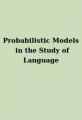
Probabilistic Models in the Study of Language
by Roger Levy
Publisher: University of California, San Diego 2012
Number of pages: 274
Description:
A textbook on the topic of using probabilistic models in scientific work on language ranging from experimental data analysis to corpus work to cognitive modeling. The intended audience is graduate students in linguistics, psychology, cognitive science, and computer science who are interested in using probabilistic models to study language.
Download or read it online for free here:
Download link
(4.5MB, PDF)
Similar books
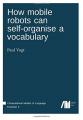 How Mobile Robots Can Self-organise a Vocabulary
by Paul Vogt - Language Science Press
This book presents a series of experiments in which two robots try to solve the symbol grounding problem. The experiments are based on the language game paradigm, and involve real mobile robots that are able to develop a grounded lexicon ...
(6119 views)
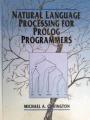 Natural Language Processing for Prolog Programmers
by Michael A. Covington - Prentice-Hall
Designed to bridge the gap for those who know Prolog but have no background in linguistics, this book concentrates on turning theories into practical techniques. Coverage includes template and keyword systems, definite clause grammars, and more.
(10818 views)
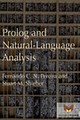 Prolog and Natural-Language Analysis
by F. C. N. Pereira, S. M. Shieber - Center for the Study of Language
A concise introduction to logic programming and the logic-programming language Prolog both as vehicles for understanding elementary computational linguistics and as tools for implementing the basic components of natural-language-processing systems.
(20877 views)
 Natural Language Processing for the Working Programmer
by Daniël de Kok, Harm Brouwer
We will go into many of the techniques that so-called computational linguists use to analyze the structure of human language, and transform it into a form that computers work with. We chose Haskell as the main programming language for this book.
(16363 views)