
Notes on Discrete Mathematics
by Miguel A. Lerma
2005
Number of pages: 154
Description:
These notes are intended to be a summary of the main ideas in course CS 310: Mathematical Foundations of Computer Science which covers fundamental concepts and tools in discreet mathematics with emphasis on their applications to computer science. Topics include logic and Boolean circuits; sets, functions, relations, databases, and finite automata: deterministic algorithms, randomized algorithms, and analysis techniques based on counting methods and recurrence equations; trees and more general graphs.
Download or read it online for free here:
Download link
(1MB, PDF)
Similar books
 Discrete Mathematics with Algorithms
by M. O. Albertson, J. P. Hutchinson - J. Wiley
This first-year course in discrete mathematics requires no calculus or computer programming experience. The approach stresses finding efficient algorithms, rather than existential results. Provides an introduction to constructing proofs...
(10189 views)
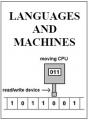 Languages and Machines
by C. D. H. Cooper - Macquarie University
This is a text on discrete mathematics. It includes chapters on logic, set theory and strings and languages. There are some chapters on finite-state machines, some chapters on Turing machines and computability, and a couple of chapters on codes.
(20811 views)
 Discrete Differential Geometry: An Applied Introduction
by M. Desbrun, P. Schroeder, M. Wardetzky - Columbia University
This new and elegant area of mathematics has exciting applications, as this text demonstrates by presenting practical examples in geometry processing (surface fairing, parameterization, and remeshing) and simulation (of cloth, shells, rods, fluids).
(14560 views)
 A Spiral Workbook for Discrete Mathematics
by Harris Kwong - Open SUNY Textbooks
This textbook covers the standard topics in discrete mathematics: logic, sets, proof techniques, basic number theory, functions, relations, and elementary combinatorics. It explains and clarifies the unwritten conventions in mathematics.
(7220 views)