
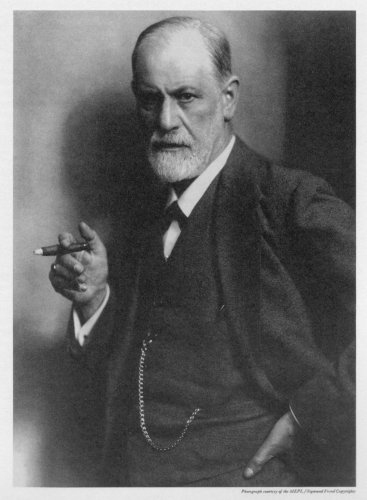
The Interpretation of Dreams
by Sigmund Freud
Publisher: Macmillan 1913
ISBN/ASIN: B0019T2A68
Number of pages: 212
Description:
Sigmund Freud revolutionized the way we think about ourselves. Much of this revolution can be traced to The Interpretation of Dreams, that outlined his theory of unconscious forces in the context of dream analysis. Introducing the id, the superego, and their problem child, the ego, Freud advanced scientific understanding of the mind by exposing motivations normally invisible to our consciousness. While there's no question that his own biases and neuroses influenced his observations, the details are less important than the paradigm shift as a whole. After Freud, our interior lives became richer and vastly more mysterious.
Download or read it online for free here:
Download link
(1.1MB, PDF)
Similar books
 The Principles of Psychology
by William James
This is a two-volume introduction to the study of the human mind. Based on his classroom lessons and first published in 1890, James has gathered together the most interesting and most accessible information for the beginning student.
(17460 views)
 Informative Psychometric Filters
by Robert Gregson - ANU Press
This book is a series of case studies with a common theme. A core idea is that both the human organism and the data analysis procedures used are filters, that may variously preserve, transform, distort or even destroy information of significance.
(6677 views)
 Changing Choices: Psychological Relativity Theory
by Matthijs J. Koornstra - Leiden University Press
The book contains a unifying theory on how the common object space is metrically transformed by individuals with different transformation parameters, due to their other previous experiences, to individually different psychological spaces ...
(10745 views)
 How We Think
by John Dewey - D. C. Heath & Co.
A classic book about thinking. Dewey studies thought from the psychological and philosophical points of view and derives practical ideas for education. Useful book whether you are a student, teacher, or just interested in the world around you.
(15481 views)