
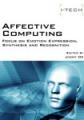
Affective Computing
by Jimmy Or
Publisher: IN-TECH 2008
ISBN-13: 9783902613233
Number of pages: 284
Description:
Since one of the most important means of human communication is facial expression, the first section of this book presents a research on synthesis and recognition of facial expressions. Given that we not only use the face but also body movements to express ourselves, in the second section we present a research on perception and generation of emotional expressions by using full-body motions. The third section of the book presents computational models on emotion, as well as findings from neuroscience research. In the last section of the book we present applications related to affective computing.
Download or read it online for free here:
Download link
(35MB, ZIP/PDF)
Similar books
 The Thousand Faces of Virtual Reality
by Cecilia Sik Lanyi (ed.) - InTech
Virtual Reality has high impact not only on research but on our daily living as well. This book has an aim to present applications, trends and newest development in three main disciplines: health sector, education and industry.
(7320 views)
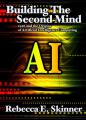 Building the Second Mind: 1956 and the Origins of Artificial Intelligence Computing
by Rebecca E. Skinner - UC Berkeley
'Building the Second Mind' is a history of the origins of AI. AI, the field that seeks to do things that would be considered intelligent if a human being did them, was developed as a general concept over centuries - it is a constant of human thought.
(10731 views)
 Ambient Intelligence
by Felix Jesus Villanueva Molina - InTech
In this book we analyze a selection of open problems which we consider the key ones in order to let ambient intelligence become a reality. This book provides the reader with a good idea about the current research lines in ambient intelligence.
(14422 views)
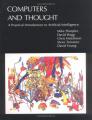 Computers and Thought: A practical Introduction to Artificial Intelligence
by Mike Sharples, et al. - A Bradford Book
The aim of this book is to introduce people with little or no computing background to artificial intelligence (AI) and cognitive science. It emphasizes the psychological, social, and philosophical implications of artificial intelligence.
(10793 views)