
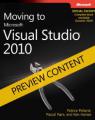
Moving to Visual Studio 2010
Publisher: Microsoft Press 2010
Number of pages: 285
Description:
The book is not a language primer, a language reference, or a single technology book. It's a book that will help professional developers move from previous versions of Visual Studio (starting with 2003 and on up). It will cover the features of Visual Studio 2010 through an application. It will go through a lot of the exciting new language features and new versions of the most popular technologies without putting the emphasis on the technologies themselves.
Download or read it online for free here:
Download link
(multiple formats)
Similar books
 F Sharp Programming
- Wikibooks
F# is a .NET implementation of OCaml, a well-known functional programming language. Some of F#'s notable features include type inference, pattern matching, interactive scripting and debugging, higher order functions, and more.
(7999 views)
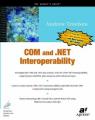 COM and .NET Interoperability
by Andrew Troelsen - Apress
This book covers the building blocks of the COM and .NET architectures, internal aspects of COM /.NET interoperability, teaches readers on how to build custom COM /.NET conversion tools, covers Win32 API, C DLLs from .NET applications, and more.
(11777 views)
 Improving Web Application Security: Threats and Countermeasures
by Microsoft Corporation - Microsoft Press
This guide gives you a foundation for designing, and configuring secure ASP.NET Web applications. Whether you have existing applications or are building new ones, you can apply the guidance to help you make your Web applications hack-resilient.
(17123 views)
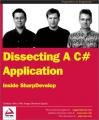 Dissecting a C# Application: Inside SharpDevelop
by Christian Holm, Mike Kruger, Bernhard Spuida - Wrox Press
Dissecting a CSharp Application teaches advanced techniques of .NET programming by getting an insiders' look at the complete Integrated Development Environment, SharpDevelop, written in C#. It includes all advanced features of a modern IDE.
(24586 views)