
Exploring the Biofluiddynamics of Swimming and Flight
by David Lentink
Publisher: Wageningen University 2008
ISBN-13: 9789085049715
Number of pages: 192
Description:
Many organisms must move through water or air in order to survive and reproduce. It is useful to analyze fluid motion as a collection of vortices, yet the dynamics are complex: vortices interact with the moving organism, interact with each other, and evolve independently in time.
Download or read it online for free here:
Download link
(12MB, PDF)
Similar books
 Using Multiscale Norms to Quantify Mixing and Transport
by Jean-Luc Thiffeault - arXiv
Mixing is relevant to many areas of science and engineering, including the pharmaceutical and food industries, oceanography, atmospheric sciences, etc. In all these situations one goal is to improve the degree of homogenisation of a substance.
(10126 views)
 The Theory of Rotating Fluids
by Harvey Philip Greenspan - Breukelen Press
The author's intention was to provide a foundation for the support and promotion of research in rotating fluids. The text concentrates on those topics which the author considers fundamental, of central importance to most the areas of application.
(14215 views)
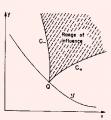 A Practical Introduction to Numerical Hydrodynamics
by Garrelt Mellema - Leiden University
An introduction to the field of numerical hydrodynamics. It will give you some insight in what is involved in such calculations. Numerical hydrodynamics is used in many parts of astrophysics. The applications we consider in this exercise are stellar.
(15334 views)
 Why the Boundary of a Round Drop Becomes a Curve of Order Four
by A. N. Varchenko, P. I. Etingof - American Mathematical Society
This book concerns the problem of evolution of a round oil spot surrounded by water when oil is extracted from a well inside the spot. It turns out that the boundary of the spot remains an algebraic curve of degree four in the course of evolution.
(17264 views)