
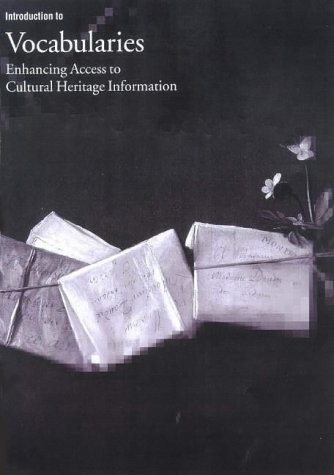
Introduction to Vocabularies: Enhancing Access to Cultural Heritage Information
by Elisa Lanzi
Publisher: Oxford University Press 1998
ISBN/ASIN: 0892365447
ISBN-13: 9780892365449
Number of pages: 72
Description:
Introduction to Vocabularies highlights the crucial role that controlled vocabularies play in the description, cataloging, or documentation of cultural heritage information. The book stresses the importance of standards and the role of authority work in creating and managing vocabularies that would ensure integrated access.
Download or read it online for free here:
Download link
(27MB, PDF)
Similar books
 Semantic Web
by Gang Wu - InTech
Web 3.0 will be built on semantic Web technologies, which will allow data to be shared and reused. This book explains examines how this powerful new technology can unify and fully leverage the ever-growing data, information, and Internet services.
(10143 views)
 Ontology in Information Science
by Ciza Thomas (ed.) - InTech
This book provides researchers in the field of ontology and information science an opportunity to share their results. It also includes the design aspects of domain ontologies considering the architecture, development strategy and selection of tools.
(6663 views)
 Applications of ICT in Libraries
- Wikibooks
Contents: Diploma ICTL; Advanced Diploma ICTL; Locating Information; Supporting Reader Development; Supporting Client Learning; Using ICT in Professional Practice; Safe and Legal Use of ICT; Net Navigator; Educator; Digital Culture - Online ...
(6878 views)
 Introduction to Archival Organization and Description
by Susanne R. Warren (ed.) - Oxford University Press
The book guides the novice to an understanding of archival information and documentation. It covers the characteristics of archival materials, analysis of information for archival description, descriptive tools in information systems, etc.
(7110 views)