
The Physics of Hearing
by T. Reichenbach, A. J. Hudspeth
Publisher: arXiv 2014
Number of pages: 87
Description:
To detect and process sound, the ear employs a highly nonlinear, adaptive, real-time spectral analyzer: the cochlea. Sound excites vibration of the eardrum and the three miniscule bones of the middle ear, the last of which acts as a piston to initiate oscillatory pressure changes within the liquid-filled chambers of the cochlea.
Download or read it online for free here:
Download link
(3.7MB, PDF)
Similar books
 Traumatic Brain Injury
by Farid Sadaka - InTech
This book provides an overview of the management of patients with traumatic brain injury, in a stepwise approach, from the intensive care unit, through to discharge from the hospital, rehabilitation, recovery and assimilation in family and society.
(10089 views)
 The Anatomy of the Brain
by Richard H. Whitehead - F. A. Davis company
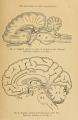
The author's aim was to furnish medical students with a clear, accurate, and concise account of the anatomy of the brain, to be used as a guide. He decided to omit minor details, and to exclude subjects which are still matters of controversy.
(9291 views)
 Transient Loss of Consciousness Management in Adults and Young People
- Royal College of Physicians
This guideline aims to define the pathways for the initial assessment of TLoC patients, and so to derive the correct underlying diagnosis quickly, efficiently, and cost-effectively, and tailor the management plan to suit their true diagnosis.
(10344 views)
 Intracerebral Hemorrhage
by Vikas Chaudhary (ed.) - InTech
Intracerebral hemorrhage is an important clinical entity encountered in practice. Common causes of intracerebral hemorrhage include hypertension, amyloid angiopathy, trauma, coagulopathy, arteriovenous malformation and underlying tumor.
(9152 views)