
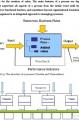
Information Systems
by Richard T. Watson
Publisher: Global Text Project 2007
Number of pages: 308
Description:
This textbook will teach students how to exploit IS
in a technology-rich environment. It will emphasize why, no matter what their major, information and
communications technologies (ICT) are, and increasingly will be, a critical element in their personal success and the success of their organizations. In other words, they need to be introduced to concepts, principles, methods, and
procedures that will be valuable to them for years to come in thinking about existing organization systems,
proposing new systems, and working with IS professionals in implementing new systems.
Download or read it online for free here:
Download link
(8.3MB, PDF)
Similar books
 Managing the Digital Library
by Roy Tennant - Reed Press
The author delivers expert guidance on the digital implications of building collections; cataloging and classification; acquisition and digitization of materials; access; public service; organization and staffing; technology and infrastructure; etc.
(5888 views)
 Introduction to Imaging
by Howard Besser - Getty Research Institute
The book allows curators, librarians, collection managers, students to better understand the processes involved in building a cohesive set of digital images. It also explores how to link digitized images to the information required to manage them.
(7244 views)
 Mastering the Information Age: Solving Problems With Visual Analytics
by Daniel Keim, et al. - Eurographics Association
The aim is to create a research roadmap that outlines the current state of visual analytics across many disciplines, and to describe the next steps to foster a strong visual analytics community, thus enabling the development of advanced applications.
(7951 views)
 Introduction to Archival Organization and Description
by Susanne R. Warren (ed.) - Oxford University Press
The book guides the novice to an understanding of archival information and documentation. It covers the characteristics of archival materials, analysis of information for archival description, descriptive tools in information systems, etc.
(7114 views)