
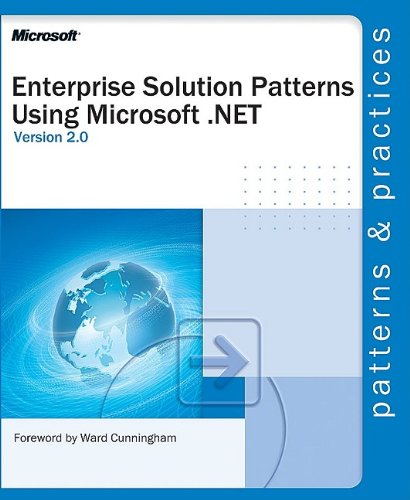
Enterprise Solution Patterns Using Microsoft .Net
by Microsoft Corporation
Publisher: Microsoft Press 2003
ISBN/ASIN: 0735618399
ISBN-13: 9780735618398
Number of pages: 367
Description:
Enterprise Solution Patterns Using Microsoft .NET embraces existing work in the patterns community, contributes new patterns, and shows how to implement these patterns in .NET. Included in the guide are an introduction to patterns and a catalog of 32 architecture, design, and implementation patterns. This guide introduces patterns and then presents them in a repository, or catalog, organized to help you locate the right combination of patterns that solve your problem.
Download or read it online for free here:
Read online
(online reading)
Similar books
 Under the Hood of .NET Memory Management
by Chris Farrell, Nick Harrison - Red gate books
To write truly fantastic software, you need to understand how .NET memory management works. This book will take you from the basics of memory management, all the way to how the OS handles its resources, and will help you write the best code you can.
(9471 views)
 Design and Implementation Guidelines for Web Clients
- Microsoft Press
This guide addresses specific goals of presentation layer component design. It provides code samples that enable you to use design patterns and Microsoft .NET Framework programming idioms effectively in the presentation layer of your applications.
(14199 views)
 Team Development with Visual Studio Team Foundation Server
- Microsoft Press
This guide shows you how to get the most out of Visual Studio 2005 Team Foundation Server to help improve the effectiveness of your team-based software development. You'll find guidance and insights you can tailor for your specific scenarios.
(10747 views)
 Developer's Guide to Microsoft Enterprise Library, C# Edition
by Alex Homer - Microsoft Press
You are holding in your hands a book that will make your life as an enterprise developer a whole lot easier. It's a guide on Microsoft Enterprise Library and it's meant to guide you through how to apply .NET for enterprise development.
(12392 views)