
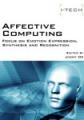
Affective Computing
by Jimmy Or
Publisher: IN-TECH 2008
ISBN-13: 9783902613233
Number of pages: 284
Description:
Since one of the most important means of human communication is facial expression, the first section of this book presents a research on synthesis and recognition of facial expressions. Given that we not only use the face but also body movements to express ourselves, in the second section we present a research on perception and generation of emotional expressions by using full-body motions. The third section of the book presents computational models on emotion, as well as findings from neuroscience research. In the last section of the book we present applications related to affective computing.
Download or read it online for free here:
Download link
(35MB, ZIP/PDF)
Similar books
 The World and Mind of Computation and Complexity
by Gregg Schaffter
With the increase in development of technology, there is research of human-like artificial intelligence that can be self-aware and act just like humans. This book explores how we may be close to developing a true artificially intelligent being.
(9949 views)
 The Thousand Faces of Virtual Reality
by Cecilia Sik Lanyi (ed.) - InTech
Virtual Reality has high impact not only on research but on our daily living as well. This book has an aim to present applications, trends and newest development in three main disciplines: health sector, education and industry.
(7637 views)
 Autonomous Agents
by Vedran Kordic - InTech
The field of multi agent systems investigates the process underlying distributed problem solving and designs some protocols and mechanisms involved in this process. This book presents an overview of the research issues in the field of multi agents.
(11317 views)
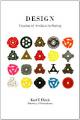 Design: Creation of Artifacts in Society
by Karl T. Ulrich - University of Pennsylvania
Design is conceiving and giving form to artifacts that solve problems. I use artifact in a broad sense to describe any product of intentional creation, including physical goods, services, software, graphics, buildings, landscapes, and processes.
(11892 views)