
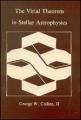
The Virial Theorem in Stellar Astrophysics
by George W. Collins, II
Publisher: Pachart Pub. House 1978
ISBN/ASIN: 0912918136
ISBN-13: 9780912918136
Number of pages: 135
Description:
The virial theorem is extremely powerful in understanding problems of stellar astrophysics, but it is also poorly understood by many who study the subject. The author has not prepared here a complete and exhaustive discussion of the virial theorem; rather this effort should be viewed as a guided introduction, punctuated by a few examples.
Download or read it online for free here:
Download link
(multiple PDF files)
Similar books
 Images of the Solar Upper Atmosphere From SUMER on SOHO
by Uri Feldman, at al. - ESA Publications Division
Investigations of the heating of the corona and the acceleration of the solar wind are two of the prime scientific goals in studying the solar upper atmosphere with the Solar and Heliospheric Observatory (SOHO) of ESA and NASA.
(11976 views)
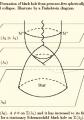 Black Holes
by P.K. Townsend - arXiv
Notes for a course taught in part III of the Cambridge University Mathematical Tripos: gravitational collapse, Schwarzschild black hole, charged black holes; rotating black holes; energy and angular momentum; black hole mechanics; Hawking radiation.
(17358 views)
 The First Stars
by Simon C. O. Glover - arXiv
The author discusses our current understanding of the physical processes involved in the formation of Population III stars. He shows how we can identify the mass scale of the first dark matter halos to host Population III star formation.
(10733 views)
 Introduction to the Theory of Black Holes
by Gerard 't Hooft - Utrecht University
Contents: The Metric of Space and Time; Curved coordinates; A short introduction to General Relativity; Gravity; The Schwarzschild Solution; The Chandrasekhar Limit; Gravitational Collapse; The Reissner-Nordstrom Solution; Horizons; and more.
(25038 views)