
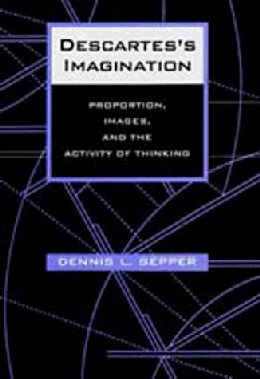
Descartes's Imagination: Proportion, Images, and the Activity of Thinking
by Dennis L. Sepper
Publisher: University of California Press 1996
ISBN/ASIN: 0520200500
ISBN-13: 9780520200500
Number of pages: 322
Description:
Rene Descartes is commonly portrayed as a strict rationalist, a philosopher who theorized a radical, unresolvable split between mind and body. In this long-overdue examination of the role of imagination in Descartes's thought, Dennis Sepper reveals a Descartes quite different from the usual dualistic portrayals and offers a critical reconception of the genesis and nature of the philosopher's thought. In a vigorous analysis of the less-known early works, Sepper finds that initially Descartes assigned the imagination a central role in the mind's activity.
Download or read it online for free here:
Read online
(online reading)
Similar books
 Modern Philosophy
by Walter Ott, Alex Dunn - BCcampus
This is a textbook in modern philosophy. It combines readings from primary sources with two pedagogical tools. Paragraphs in italics introduce figures and texts. Numbered study questions ask students to reconstruct an argument from the text.
(7270 views)
 Metaphysics
by Mark Pestana - InTech
This collection will give readers a sense of the type of metaphysical investigations that are now being carried out by thinkers in the Western nations. We also hope that the reader's curiosity will be peaked so that further inquiry will follow.
(9961 views)
 Metaphysics
by Aristotle - The Internet Classics Archive
Metaphysics was regarded as 'the Queen of Sciences' even before the age of Aristotle. This multipart essay by the prominent philosopher examines the nature of existence, along with issues related to causation, form and matter, mathematics, and God.
(14304 views)
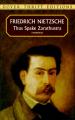 Thus Spake Zarathustra
by Friedrich Nietzsche - Modern Library
This work is the first thorough statement of Nietzsche's philosophy, and also a masterpiece of literature. The book is a combination of prose and poetry, epigrams, and parodies. Nietzsche made here his famous statement that God is dead.
(16963 views)