
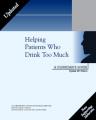
Helping Patients Who Drink Too Much: A Clinician's Guide
Publisher: National Institute on Alcohol Abuse and Alcoholism 2005
Number of pages: 40
Description:
This Guide is written for primary care and mental health clinicians. It has been produced by the National Institute on Alcohol Abuse and Alcoholism (NIAAA), a component of the National Institutes of Health, with guidance from physicians, nurses, advanced practice nurses, physician assistants, and clinical researchers.
Download or read it online for free here:
Download link
(1.6MB, PDF)
Similar books
 Drug Addiction Research and the Health of Women
by Cora L. Wetherington, Adele B. Roman - National Institutes of Health
The scientific evidence generated thus far suggests that drug abuse and addiction present different challenges to women's health, progress differently in females than in males, and may require different treatment approaches and strategies.
(12801 views)
 Drugs, Brains and Behavior
by C. Robin Timmons, Leonard W. Hamilton - Rutgers University
From the table of contents: Behavior and the Chemistry of The Brain; General Methods of Brain/Behavior Analysis; Psychopharmacological Concepts; Specific Fears, Vague Anxieties And The Autonomic Nervous System; Pain and Other Stressors; etc.
(17785 views)
 Comparative Effectiveness of Smoking Cessation Treatments for Patients with Depression
- Department of Veterans Affairs
Smoking is disproportionately higher among persons with depression. Furthermore, smokers with depression may experience more challenges when trying to make and maintain a quit attempt, such as greater negative mood symptoms from withdrawal.
(9493 views)
 Addictions: From Pathophysiology to Treatment
by David Belin (ed.) - InTech
Addiction, increasingly perceived as a heterogeneous brain disorder, is one of the most peculiar psychiatric pathologies in that its management involves various resources from the biological, psychological, medical, social, and legal realms.
(10390 views)