
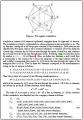
Non-Abelian Discrete Symmetries in Particle Physics
by Hajime Ishimori, at al.
Publisher: arXiv 2010
Number of pages: 179
Description:
We review pedagogically non-Abelian discrete groups, which play an important role in the particle physics. We show group-theoretical aspects for many concrete groups, such as representations, their tensor products. We explain how to derive, conjugacy classes, characters, representations, and tensor products for these groups (with a finite number).
Download or read it online for free here:
Download link
(1.2MB, PDF)
Similar books
 Nuclear and Particle Physics
by Niels Walet - UMIST
In these lecture notes the author shall discuss nuclear and particle physics on a somewhat phenomenological level. The mathematical sophistication shall be rather limited, with an emphasis on the physics and on symmetry aspects.
(16224 views)
 The angular momentum controversy: What's it all about and does it matter?
by E. Leader, C. Lorce - arXiv
The general question, crucial to the internal structure of nucleon, of how to split the total angular momentum of a photon or gluon into spin and orbital contributions is one of the most important and interesting challenges faced by gauge theories.
(8967 views)
 Cosmology for Particle Physicists
by U. A. Yajnik - arXiv
We begin with a recapitulation of General Relativity, and the Standard Model of Cosmology. This is followed by lectures on inflation, density perturbations, study of hot and cold relics decoupled from the remaining constituents, and baryon asymmetry.
(15809 views)
 Introduction to High Energy Physics
by Dan Kabat - Lehman College
Contents: The particle zoo; Flavor SU(3) and the eightfold way; Quark properties; Chiral spinors and helicity amplitudes; Spontaneous symmetry breaking; Chiral symmetry breaking; Effective field theory and renormalization; and more.
(10536 views)