
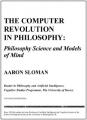
The Computer Revolution in Philosophy: Philosophy, Science, and Models of Mind
by Aaron Sloman
Publisher: The Harvester Press 1978
Number of pages: 208
Description:
Some parts of the book are dated whereas others are still relevant both to the scientific study of mind and to philosophical questions about the aims of science, the nature of theories and explanations, varieties of concept formation, and to questions about the nature of mind.
Download or read it online for free here:
Download link
(3.1MB, PDF)
Similar books
 The Problem of Truth
by Herbert Wildon Carr - Dodge Publishing Co.
The problem of truth is a problem of philosophy. It is not a problem of merely historical interest, but a present problem -- a living controversy, the issue of which is undecided. Its present interest centre round the doctrine of pragmatism.
(6075 views)
 Where are the Zombies?
by Kar Lee - Smashwords
Is there afterlife? What is the purpose of our existence? Can computers and robots be conscious, and wake up one day to ask this very same question? This book is an intriguing exploration on the nature of the conscious mind.
(10702 views)
 Reading for Philosophical Inquiry: A Brief Introduction to Philosophical Thinking
by Lee Archie, John G. Archie
Introduction to philosophical thinking, with chosen essays: the philosophy of life, the philosophy of religion, ethics, and metaphysics and theory of knowledge. The readings illustrate the interrelations between these areas of philosophy.
(16280 views)
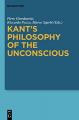 Kant's Philosophy of the Unconscious
by Piero Giordanetti (ed.) - De Gruyter Open
The unconscious, the other of consciousness, is a key problem of the critical philosophy. The purpose of the volume is to fill a substantial gap in Kant research and to offer a complete survey of the topic in different areas of research.
(4639 views)