
Canonical Transformations in Quantum Mechanics
by Arlen Anderson
Publisher: arXiv 1993
Number of pages: 43
Description:
Quantum canonical transformations are defined algebraically outside of a Hilbert space context. This generalizes the quantum canonical transformations of Weyl and Dirac to include non-unitary transformations. The importance of non-unitary transformations for constructing solutions of the Schroedinger equation is discussed.
Download or read it online for free here:
Download link
(310KB, PDF)
Similar books
 Generally Covariant Quantum Theory
by Johan Noldus - viXra
The intention of this book is to dig deep in the first principles of physics and develop a relativistic quantum theory from scratch. By this, I mean a theory for the so-called elementary particles which constitute building blocks of nature ...
(6184 views)
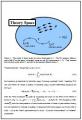 Quantum Einstein Gravity
by Martin Reuter, Frank Saueressig - arXiv
We give a pedagogical introduction to the basic ideas and concepts of the Asymptotic Safety program in Quantum Einstein Gravity. Using the continuum approach based upon the effective average action, we summarize the state of the art of the field.
(9822 views)
 An Introduction to Quantum Gravity
by Bryce S. DeWitt, Giampiero Esposito - arXiv
The reader is introduced to the functional integral quantization of gravitation and Yang-Mills theory. The text is useful for all Ph.D. students who face the task of learning some basic concepts in quantum gravity in a relatively short time.
(10679 views)
 Introduction to Loop Quantum Gravity
by Simone Mercuri - arXiv
After a description of some general arguments and an introduction to the canonical theory of gravity, the author reviews the background independent approach to quantum gravity, giving only a brief survey of Loop Quantum Gravity.
(9654 views)