
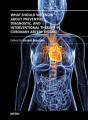
What Should We Know About Prevented, Diagnostic, and Interventional Therapy in Coronary Artery Disease
by Branislav G. Baskot (ed.)
Publisher: InTech 2013
ISBN-13: 9789535110439
Number of pages: 472
Description:
The mortality from ischemic heart disease has decreased in recent years. The better understanding of risk factors associated with development of coronary artery disease has significantly contributed to this decline. Improvements in medical and interventional therapy have reduced the complications associated with acute myocardial infarction as well as revascularization.
Download or read it online for free here:
Download link
(29MB, PDF)
Similar books
 Atrial Fibrillation
- Royal College of Physicians
The guideline covers aspects of diagnosis and the management of atrial fibrillation (AF) in a number of different circumstances. It covers paroxysmal, persistent and permanent AF, and considers AF developing after surgical procedures.
(11043 views)
 Cardiac Surgery in the Adult
by Lawrence H. Cohn - McGraw-Hill Professional
The next classic reference in cardiac surgery. This comprehensive book focuses on the cardiac surgery in the adult patient. Indications, pathophysiology, surgical decision making, complications, and results of surgical treatment are examined in depth.
(43684 views)
 Capillary Fluid Exchange: Regulation, Functions, and Pathology
by J. Scallan, V. H. Huxley, R. J. Korthuis - Morgan & Claypool Life Sciences
The book summarizes our current understanding of the factors involved in the regulation of transcapillary fluid movement, how fluid movements across the endothelial barrier and through the interstitium and lymphatic vessels influence cell function.
(12462 views)
 Inflammation and the Microcirculation
by D. Neil Granger, Elena Senchenkova - Morgan & Claypool Publishers
The microcirculation is highly responsive to the inflammatory response. All segments of the microvasculature exhibit phenotypic changes during inflammation that are directed toward enhancing the delivery of inflammatory cells to the injured tissue.
(10834 views)