
Complex Fluids: The Physics of Emulsions
by M. E. Cates
Publisher: arXiv 2012
Number of pages: 43
Description:
These lectures start with the mean field theory for a symmetric binary fluid mixture, addressing interfacial tension, the stress tensor, and the equations of motion (Model H). We then consider the phase separation kinetics of such a mixture: coalescence, Ostwald ripening, its prevention by trapped species, coarsening of bicontinuous states, and the role of shear flow. The third topic addressed is the stabilization of emulsions by using surfactants to reduce or even eliminate the interfacial tension between phases.
Download or read it online for free here:
Download link
(1MB, PDF)
Similar books
 Computational Turbulent Incompressible Flow
by Johan Hoffman, Claes Johnson - Springer
In this book we address mathematical modeling of turbulent fluid flow, and its many mysteries that have haunted scientist over the centuries. We approach these mysteries using a synthesis of computational and analytical mathematics.
(13888 views)
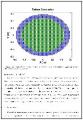 Lagrangian Solid Modeling
by Matthew Marko - viXra
The author demonstrates a stable Lagrangian solid modeling method, tracking the interactions of solid mass particles, rather than using a meshed grid. This method avoids the problem of tensile instability seen with Smooth Particle Applied Mechanics.
(7510 views)
 Microfluidics
by Philippe Marmottant - Wikibooks
Microfluidics is the science of fluid flows at the microscopic scale. This book will deal with the basic physical principles involved in microfluidics. We hope it will provide a background knowledge to consult more specialized books or article.
(8522 views)
 Topics in dynamics I: Flows
by Edward Nelson - Princeton University Press
Lecture notes for a course on differential equations covering differential calculus, Picard's method, local structure of vector fields, sums and Lie products, self-adjoint operators on Hilbert space, commutative multiplicity theory, and more.
(20850 views)