
Decision Making and Productivity Measurement
by Dariush Khezrimotlagh
Publisher: arXiv 2016
Number of pages: 214
Description:
I wrote this book as a self-teaching tool to assist every teacher, student, mathematician or non-mathematician for educating herself or others, and to support their understanding of the elementary concepts on assessing the performance of a set of homogenous firms, as well as how to correctly adapt mathematics to these concepts step by step, in order to underpin this area and rebuild the foundation and columns of efficiency measurement for further research.
Download or read it online for free here:
Download link
(4.6MB, PDF)
Similar books
 Linear Programming
by Jim Burke - University of Washington
These are notes for an introductory course in linear programming. The four basic components of the course are modeling, solution methodology, duality theory, and sensitivity analysis. We focus on the simplex algorithm due to George Dantzig.
(8247 views)
 Universal Optimization and Its Application
by Alexander Bolonkin - viXra.org
This book describes new method of optimization (''Method of Deformation of Functional'') that has the advantages at greater generality and flexibility as well as the ability to solve complex problems which other methods cannot solve.
(6037 views)
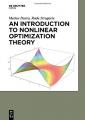 An Introduction to Nonlinear Optimization Theory
by Marius Durea, Radu Strugariu - De Gruyter Open
Starting with the case of differentiable data and the classical results on constrained optimization problems, continuing with the topic of nonsmooth objects involved in optimization, the book concentrates on both theoretical and practical aspects.
(7806 views)
 Robust Optimization
by A. Ben-Tal, L. El Ghaoui, A. Nemirovski - Princeton University Press
Written by the principal developers of robust optimization, and describing the main achievements of a decade of research, this is the first book to provide a comprehensive and up-to-date account of this relatively new approach to optimization.
(11070 views)