
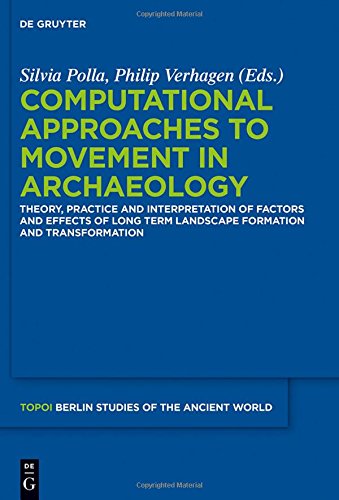
Computational Approaches to the Study of Movement in Archaeology
by Silvia Polla, Philip Verhagen
Publisher: De Gruyter Open Ltd 2014
ISBN/ASIN: 3110288311
Number of pages: 137
Description:
The archaeological study of movement and of its related patterns and features has been transformed by the use of GIS. Path analysis has become a very popular approach to the study of settlement and land-use dynamics in landscape archaeology. This volume addresses theoretical, technical and interpretative issues and presents case studies.
Download or read it online for free here:
Download link
(multiple PDF files)
Similar books
 Archaeology 2.0: New Approaches to Communication and Collaboration
by E. C. Kansa, S. W. Kansa, E. Watrall - eScholarship.org
How is the Web transforming the professional practice of archaeology? How can we best understand the possibilities of the Web in meeting the specialized needs of professionals? These are among the many questions posed and addressed in this book.
(8211 views)
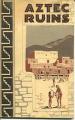 Aztec Ruins National Monument
by John M. Corbett - National Park Service
Aztec Ruins National Monument consists of an enclosed area containing six major archeological complexes of rooms and structures, and at least seven smaller mounds which may contain structures or may be refuse mounds from the larger occupation zones.
(6340 views)
 Ceramic Ethnoarchaeology
by William A. Longacre - University of Arizona Press
Drawing on projects undertaken around the world, the authors of this book focus on identifying social and behavioral sources of ceramic variation to show how analogical reasoning is fundamental to archaeological interpretation.
(784 views)
 Prehistoric Men
by Robert J. Braidwood - Chicago Natural History Museum
The men who lived in prehistoric times left us no history books, but they did unintentionally leave a record of their presence and their way of life. This record is studied and interpreted by different kinds of scientists ...
(6942 views)