
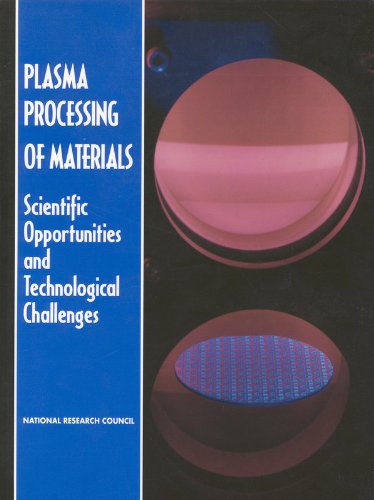
Plasma Processing of Materials
Publisher: The National Academies Press 1985
Number of pages: 180
Description:
Plasma processing of materials is a critical technology to several of the largest manufacturing industries in the world -- electronics, aerospace, automotive, steel, biomedical, and toxic waste management. This book describes the relationship between plasma processes and the many industrial applications, examines in detail plasma processing in the electronics industry, highlights the scientific foundation underlying this technology, and discusses education issues in this multidisciplinary field.
Download or read it online for free here:
Download link
(29MB, PDF)
Similar books
 Mechanics of Materials
by Madhukar Vable - Michigan Technological University
With strong practical examples and real-life engineering problems, the book promises to provide the skills and principles that students need to organize, integrate, and make sense of the flood of information in the world of modern engineering.
(18838 views)
 Carbon Fibers
by Jonathan Phillips (ed.) - MDPI AG
The focus is on just one area of carbon research: fibers. The topics covered include new fiber fabrication protocols, mechanical behavior of fiber reinforced polymers, new techniques to study the microstructure of fiber containing composites, etc.
(7944 views)
 Materials of Engineering Construction
by Clement T Wiskocil - Berkeley
The book presents information concerning the mechanical and physical properties of the principal materials of engineering. A knowledge of these properties is necessary for the intelligent selection and use of materials for given requirements.
(17405 views)
 Applied Mechanics
by Gaetano Lanza - J. Wiley
The work is a treatise on strength and stability, a number of subjects usually included in treatises on applied mechanics are omitted. It is primarily a text-book, the different subjects are presented in the best way for the progress of the class.
(25537 views)