
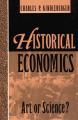
Historical Economics: Art or Science?
by Charles P. Kindleberger
Publisher: University of California Press 1990
ISBN/ASIN: 0520073436
ISBN-13: 9780520073432
Number of pages: 358
Description:
Historical economics, drawing on history, politics, cultural anthropology, sociology, and geography, bridges the gap between abstraction and fact engendered by traditional conceptions of economic science. The essays cover a range of historical periods and also include European history and explorations of long-run changes in the American economy. Economists and historians, both the converted and the unconvinced, will want to consult this powerful argument for the importance of historical economics.
Download or read it online for free here:
Read online
(online reading)
Similar books
 Farewell to the Self-Employed: Deconstructing a Socioeconomic and Legal Solipsism
by Marc Linder - Greenwood Press
This work offers a theoretical foundation for discussing the self-employed, their role over time, and the formulation of policy towards them. It is a comprehensive analysis of self-employment to integrate legal, sociological, and economic theory.
(10219 views)
 Bargaining and Markets
by Martin J. Osborne, Ariel Rubinstein - Academic Press
Bargaining and markets presents the modern theory of bargaining and describes several applications of the theory to the study of markets. It uses a small number of models to illustrate the key points and offers detailed proofs of all results.
(18112 views)
 The Pure Theory of Capital
by Friedrich A. Hayek - Ludwig von Mises Institute
The greatest failing of non-Austrians theories of macroeconomics is that they lack a robust theory of capital. F.A. Hayek sought to fill out the theory of the business cycle with an impenetrable one, and the result was this remarkable 1941 treatise.
(16258 views)
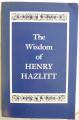 The Wisdom of Henry Hazlitt
by Hans F. Sennholz - Foundation for Economic Education
This collection of essays introduces the reader to the economic thought of Henry Hazlitt. The Wisdom of Henry Hazlitt contains essays discussing Hazlitt's life, philosophy, career, and unwavering defense of the free market.
(10518 views)