
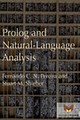
Prolog and Natural-Language Analysis
by F. C. N. Pereira, S. M. Shieber
Publisher: Center for the Study of Language 2002
ISBN/ASIN: 0937073172
ISBN-13: 9780937073179
Number of pages: 204
Description:
This book provides, in one volume, one of the best introductions to prolog programming and one of the best introductions to natural language processing. It is virtually unique in that it shows how to interface a natural language interface to a theorem prover. This book was far ahead of its time when it was published, and it is still far ahead of most of the books written today on NLP.
Download or read it online for free here:
Download link
(1.2MB, PDF)
Similar books
 An Introduction to Logic Programming through Prolog
by Michael Spivey - Prentice Hall
Using theory as a foundation for practical programming, this text presents the theory of logic programming with clear proofs and implementation techniques. It covers logical theory, programming, and the structure of a simple Prolog implementation.
(15359 views)
 The Power of Prolog
by Markus Triska - metalevel.at
The goal of this material is to bridge the gap between the great Prolog textbooks of the past and the language as it currently is, several decades after these books were written. You will see that many limitations of the past are no longer relevant.
(6721 views)
 Prolog Programming: A First Course
by Paul Brna
These notes are designed for undergraduate students who have some programming experience. The function of the text is to provide students studying Artificial Intelligence with an intensive introduction to Prolog, there is a slight bias towards AI.
(14781 views)
 The First 10 Prolog Programming Contests
by Bart Demoen, Phuong-Lan Nguyen, Tom Schrijvers, Remko Troncon
This book shows solutions to problems that were in the first 10 Prolog Programming Contests. The solutions could have been constructed during the contest under time pressure, and so you will find many solutions using the generate and test strategy.
(13349 views)