
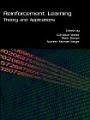
Reinforcement Learning
by C. Weber, M. Elshaw, N. M. Mayer
Publisher: InTech 2008
ISBN-13: 9783902613141
Number of pages: 424
Description:
The first 11 chapters of this book describe and extend the scope of reinforcement learning. The remaining 11 chapters show that there is already wide usage in numerous fields. Reinforcement learning can tackle control tasks that are too complex for traditional, hand-designed, non-learning controllers. As learning computers can deal with technical complexities, the tasks of human operators remain to specify goals on increasingly higher levels.
Download or read it online for free here:
Download link
(12MB, PDF)
Similar books
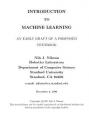 Introduction To Machine Learning
by Nils J Nilsson
This book concentrates on the important ideas in machine learning, to give the reader sufficient preparation to make the extensive literature on machine learning accessible. The author surveys the important topics in machine learning circa 1996.
(29970 views)
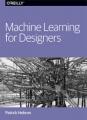 Machine Learning for Designers
by Patrick Hebron - O'Reilly Media
This book introduces you to contemporary machine learning systems and helps you integrate machine-learning capabilities into your user-facing designs. Patrick Hebron explains how machine-learning applications can affect the way you design websites.
(7109 views)
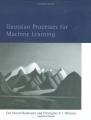 Gaussian Processes for Machine Learning
by Carl E. Rasmussen, Christopher K. I. Williams - The MIT Press
Gaussian processes provide a principled, practical, probabilistic approach to learning in kernel machines. The treatment is comprehensive and self-contained, targeted at researchers and students in machine learning and applied statistics.
(28135 views)
 Practical Artificial Intelligence Programming in Java
by Mark Watson - Lulu.com
The book uses the author's libraries and the best of open source software to introduce AI (Artificial Intelligence) technologies like neural networks, genetic algorithms, expert systems, machine learning, and NLP (natural language processing).
(25021 views)