
The Theory of Rotating Fluids
by Harvey Philip Greenspan
Publisher: Breukelen Press 1990
ISBN/ASIN: 0962699802
ISBN-13: 9780962699801
Number of pages: 352
Description:
The author's intention was to provide a basic foundation for the support and promotion of research in rotating fluids. The text concentrates on those topics which the author considers fundamental, of central importance to most, if not all, the areas of application.
Download or read it online for free here:
Read online
(online preview)
Similar books
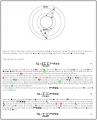 Introduction to Statistical Theory of Fluid Turbulence
by Mahendra K. Verma - arXiv
Fluid and plasma flows exhibit complex random behaviour, called turbulence. This text is a brief introduction to the statistical theory of fluid turbulence, with emphasis on field-theoretic treatment of renormalized viscosity and energy fluxes.
(12840 views)
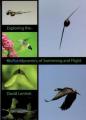 Exploring the Biofluiddynamics of Swimming and Flight
by David Lentink - Wageningen University
Many organisms move through water or air in order to survive and reproduce. It is useful to analyze fluid motion as a collection of vortices: vortices interact with the moving organism, interact with each other, and evolve independently in time.
(8211 views)
 Fluid Flow at Branching Junctions
by Taha Sochi - arXiv
The flow of fluids at branching junctions plays important roles in most biological flow systems. The present paper highlights some key issues related to the flow of fluids at these junctions with special emphasis on the biological flow networks.
(10639 views)
 Basics of Fluid Mechanics
by Genick Bar-Meir
Introductory textbook for the fluid mechanics in undergraduate classes for engineering/science students. It can be used as a reference book for people who have at least some basics knowledge of science areas such as calculus, physics, etc.
(30157 views)