
Introduction to Chemical Engineering Processes
Publisher: Wikibooks 2012
Number of pages: 136
Description:
This book is for anyone who is interested in some of the basic principles behind what chemical engineers do and how they can use powerful tools from physics to solve problems involving steady-state processes. The book is designed as an introduction to the subject and therefore tends to stay away from the more complicated mathematics.
Download or read it online for free here:
Download link
(1.6MB, PDF)
Similar books
 Practical Chemistry for Engineering Students
by Arthur James Hale - Longmans, Green, and Co.
The present work, which is essentially for laboratory use, should be found to be a valuable adjunct to the systematic courses of lectures and tutorial classes which the student is expected to attend during his first and second years.
(15336 views)
 Fundamentals of Chemical Reaction Engineering
by Mark E. E. Davis, Robert J. J. Davis - McGraw-Hill
An introduction to the quantitative treatment of chemical reaction engineering. The book is appropriate for a one-semester undergraduate or first-year graduate course. The text covers both homogeneous and heterogeneous reacting systems.
(18742 views)
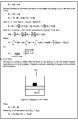 Fundamentals of Thermodynamics
by J. Karl Johnson - University of Pittsburgh
This text will provide the student with basic thermodynamic tools for solving many classes of problems. It is intended for first year chemical engineering graduate students with at least one undergraduate course in classical thermodynamics.
(18280 views)
 Membrane Filtration Processes
by Michel Jaffrin - Bookboon
This book describes the various filtration processes using membranes such as microfiltration, ultrafiltration, nanofiltration, reverse osmosis. Fluid mechanics concepts are reviewed in order to permit to describe the flow inside filtration modules.
(9122 views)