
Pixel Shaders: An Interactive Introduction to Graphics Programming
by Toby Schachman
Publisher: pixelshaders.com 2013
Description:
This book is intended to bring the wonder and joy of graphics processor programming to a wider audience. It is targeted at artists who want to integrate powerful computer graphics into their work, and traditional programmers who want to try thinking about programming in a different way.
Download or read it online for free here:
Read online
(online reading)
Similar books
 Learn Computer Graphics From Scratch
- Scratchapixel
From the table of contents: Mathematics and Physics for Computer Graphics; Foundations of 3D Rendering; Better, Faster, More; Advanced Techniques; Digital Imaging; Procedural Generation of Virtual Worlds. 32 lessons, 166 chapters, C++ source code.
(7075 views)
 Blender 3D: Noob to Pro
- Wikibooks
This book is a series of tutorials to help new users learn Blender. The tutorials increase in difficulty, and later tutorials build on the lessons in previous ones. Therefore, Blender beginners should follow the tutorials in sequence.
(29614 views)
 Magic Ink: Information Software and the Graphical Interface
by Bret Victor - worrydream.com
The book demonstrates the crucial role of information graphic design, and presents three approaches to context-sensitivity. The intent is to introduce a 'unified theory' of information software design, and provide inspiration for designers.
(14272 views)
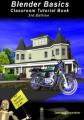 Blender Basics: Classroom Tutorial Book
by James Chronister
Blender is a 3D technology rendering/animation/game development open-sourced freeware program maintained by the Blender Foundation. This tutorial book is designed to get you up and running in the basics of creating objects and scenes and animating.
(22110 views)