
Realism-Completeness-Universality interpretation of quantum mechanics
by Petr Hajicek
Publisher: arXiv 2015
Number of pages: 307
Description:
The aim of the book is to give a consequent and mathematical formulation to the interpretation of quantum mechanics that is often met, mostly in some rough and naive form, among practical physicists. The ideas are carefully developed starting from the well-known textbook material so that the book ought to be accessible to students of theoretical physics that finished the standard course of quantum mechanics.
Download or read it online for free here:
Download link
(2MB, PDF)
Similar books
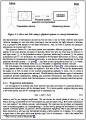 Quantum Information Theory
by Robert H. Schumann - arXiv
A short review of ideas in quantum information theory. Quantum mechanics is presented together with some useful tools for quantum mechanics of open systems. The treatment is pedagogical and suitable for beginning graduates in the field.
(16606 views)
 Non-locality and Possible World
by Tomasz F. Bigaj - De Gruyter Open
This book uses the formal semantics of counterfactual conditionals to analyze the problem of non-locality in quantum mechanics. Counterfactual conditionals (subjunctive conditionals) enter the analysis of quantum entangled systems ...
(5293 views)
 Perspectives in Quantum Physics: Epistemological, Ontological and Pedagogical
by Charles Baily - arXiv
The author shows how a transformed modern physics curriculum may positively impact student perspectives on indeterminacy and wave-particle duality, by making questions of classical and quantum reality a central theme of his course.
(11413 views)
 Quantum Nonlocality
by Lev Vaidman (ed.) - MDPI AG
This book presents the current views on the bizarre property of quantum theory: nonlocality. The contributions in the book describe the bizarre aspects of nonlocality -- a phenomenon which cannot be explained in the framework of classical physics.
(6232 views)