

Solving PDEs in Python
by Hans Petter Langtangen, Anders Logg
Publisher: Springer 2017
Number of pages: 148
Description:
This book offers a concise and gentle introduction to finite element programming in Python based on the popular FEniCS software library. Using a series of examples, including the Poisson equation, the equations of linear elasticity, the incompressible Navier-Stokes equations, and systems of nonlinear advection-diffusion-reaction equations, it guides readers through the essential steps to quickly solving a PDE in FEniCS, such as how to define a finite variational problem, how to set boundary conditions, how to solve linear and nonlinear systems, and how to visualize solutions and structure finite element Python programs.
Download or read it online for free here:
Download link
(multiple PDF files)
Similar books
 Lectures on Numerical Analysis
by Dennis Deturck, Herbert S. Wilf - University of Pennsylvania
Contents: Differential and Difference Equations (Linear equations with constant coefficients, Difference equations, Stability theory); The Numerical Solution of Differential Equations (Euler's method); Numerical linear algebra.
(12407 views)
 Computing of the Complex Variable Functions
by Solomon I. Khmelnik, Inna S. Doubson - MiC
Hardware algorithms for computing of all elementary complex variable functions are proposed. Contents: A method 'digit-by-digit'; Decomposition; Compositions; Two-step-by-step operations; Taking the logarithm; Potentiation; and more.
(9784 views)
 Handbook of Mathematical Functions
by M. Abramowitz, I. A. Stegun - GPO
Students and professionals in the fields of mathematics, physics, engineering, and economics will find this reference work invaluable. A classic resource for special functions, standard trig, and exponential logarithmic definitions and extensions.
(33312 views)
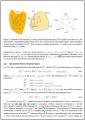 The Numerical Approximation of Functional Differential Equations
by Daniele Venturi - arXiv
The purpose of this manuscript is to provide a new perspective on the problem of numerical approximation of nonlinear functionals and functional differential equations. The proposed methods will be described and demonstrated in various examples.
(7719 views)