
Groups and Semigroups: Connections and Contrasts
by John Meakin
Publisher: University of Nebraska-Lincoln 2005
Number of pages: 40
Description:
In the present paper, I will discuss some of these connections between group theory and semigroup theory, and I will also discuss some rather surprising contrasts between the theories. While I will briefly mention some aspects of finite semigroup theory, regular semigroup theory, and the theory of linear algebraic monoids, I will focus primarily on the theory of inverse semigroups and its connections with geometric group theory.
Download or read it online for free here:
Download link
(360KB, PDF)
Similar books
 Thin Groups and Superstrong Approximation
by Emmanuel Breuillard, Hee Oh (eds.) - Cambridge University Press
This book focuses on recent developments concerning various quantitative aspects of thin groups. It provides a broad panorama of a very active field of mathematics at the boundary between geometry, dynamical systems, number theory, and combinatorics.
(6785 views)
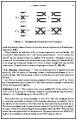 Why are Braids Orderable?
by Patrick Dehornoy, at al.
This book is an account of several quite different approaches to Artin's braid groups, involving self-distributive algebra, uniform finite trees, combinatorial group theory, mapping class groups, laminations, and hyperbolic geometry.
(12992 views)
 Introduction to Groups, Invariants and Particles
by Frank W. K. Firk - Orange Grove Texts Plus
This is an introduction to group theory, with an emphasis on Lie groups and their application to the study of symmetries of the fundamental constituents of matter. The text was written for seniors and advanced juniors, majoring in the physical sciences.
(19887 views)
 Introduction to Arithmetic Groups
by Dave Witte Morris - arXiv
This revised version of a book in progress on arithmetic groups and locally symmetric spaces contains several additional chapters, including the proofs of three major theorems of G. A. Margulis (superrigidity, arithmeticity, and normal subgroups).
(10946 views)