
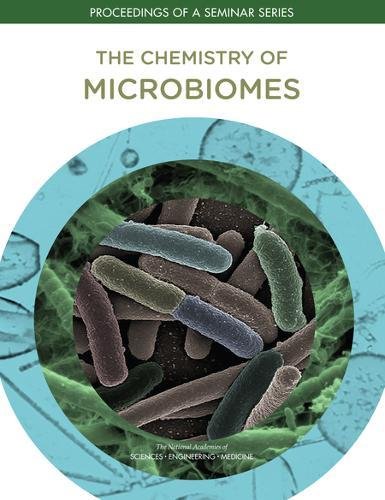
The Chemistry of Microbiomes
Publisher: National Academies Press 2017
ISBN/ASIN: 0309458366
ISBN-13: 9780309458368
Number of pages: 132
Description:
The human organism is no longer considered a monolithic assembly of tissues, but is instead a true ecosystem composed of human cells, bacteria, fungi, algae, and viruses. As such, humans are not unlike other complex ecosystems containing microbial assemblages observed in the marine and earth environments. They all share a basic functional principle: Chemical communication is the universal language that allows such groups to properly function together. These chemical networks regulate interactions like metabolic exchange, antibiosis and symbiosis, and communication.
Download or read it online for free here:
Download link
(5.7MB, PDF)
Similar books
 Introduction to Clinical Biochemistry: Interpreting Blood Results
by Graham Basten - BookBoon
This book is a concise introduction to the common blood tests and concepts used in pathology. It is aimed for undergraduate students reading medicine, nursing and midwifery and subjects allied to health such as Biomedical Science.
(12673 views)
 Principles of Biochemistry
- Wikibooks
Contents: Cell and its Biochemistry; Biomolecules; The Carbohydrates: Monosaccharides, Disaccharides and Polysaccharides; Glucose,Glycogen and Diabetes; Glycolysis; Water: The solvent of the cell; Nucleic acid; Chromosome and its structure; etc.
(13804 views)
 Practical Organic and Biochemistry
by R. Plimmer - Longmans
This book gives a nearly complete statement of the whole subject. The essential points are illustrated by the practical experiments. The book is intended mainly for medical students, but it contains the essentials for all students of Biology.
(21375 views)
 Micro- and Nano-Transport of Biomolecules
by David Bakewell - BookBoon
This ebook is generally intended for undergraduate students from chemical, life and physical sciences wanting to find out about the basic properties of biomolecules and how they can be transported in liquids on the micro- to nano-scale.
(16754 views)