
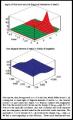
Introduction to relativistic astrophysics and cosmology through Maple
by V. L. Kalashnikov
Publisher: arXiv 2001
Number of pages: 124
Description:
The author presents the pedagogical introduction to relativistic astrophysics and cosmology, which is based on computational and graphical resources of Maple 6. The knowledge of basics of general relativity and differential geometry is supposed.
Download or read it online for free here:
Download link
(700KB, PDF)
Similar books
 Introduction to Cosmology
by David H Lyth - arXiv
These notes form an introduction to cosmology with special emphasis on large scale structure, the cmb anisotropy and inflation. In some places a basic familiarity with particle physics is assumed, but otherwise no special knowledge is needed.
(14818 views)
 Dark Energy: Observational Evidence and Theoretical Models
by B. Novosyadlyj, V. Pelykh, Yu. Shtanov, A. Zhuk - Akademperiodyka
The book elucidates the current state of the dark energy problem and presents the results of the authors, who work in this area. It describes the observational evidence for the existence of dark energy, the methods of constraining of its parameters.
(10719 views)
 Cosmology for Particle Physicists
by U. A. Yajnik - arXiv
We begin with a recapitulation of General Relativity, and the Standard Model of Cosmology. This is followed by lectures on inflation, density perturbations, study of hot and cold relics decoupled from the remaining constituents, and baryon asymmetry.
(15542 views)
 Advanced Topics in Cosmology: A Pedagogical Introduction
by T. Padmanabhan - arXiv
Here is an introduction to several advanced topics in contemporary cosmology. Topics covered: the thermal history of the universe, linear perturbation theory, theory of CMBR temperature anisotropies and the inflationary generation of perturbation.
(11210 views)