
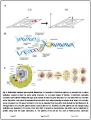
An Illustrated Introduction to the Basic Biological Principles
by Simon Fu
Publisher: arXiv 2009
Number of pages: 107
Description:
Both external environmental selection and internal lower-level evolution are essential for an integral picture of evolution. This paper proposes that the division of internal evolution into DNA/RNA pattern formation (genotype) and protein functional action (phenotype) resolves a universal conflict between fitness and evolvability.
Download or read it online for free here:
Download link
(2.2MB, PDF)
Similar books
 Extinct Monsters
by H. N. Hutchinson - Chapman & Hall
The object of this book is to describe some of the larger and more monstrous forms of the past -- the lost creations of the old world; to clothe their dry bones with flesh, and suggest for them backgrounds indicated by the discoveries of geology.
(8259 views)
 Evolution and Philosophy: An Introduction
by John S. Wilkins - The TalkOrigins Archive
Critics of evolutionary theory very often misunderstand the issues of the philosophy of science. This essay summarises some of the more important recent developments to show that evolution is no worse off philosophically than any other science.
(7704 views)
 The Evolution of Aging
by Theodore C. Goldsmith - Azinet LLC
This book provides a historical review of biological aging theories including underlying evolution and genetics issues and describes exciting recent discoveries and new theories that are causing renewed interest in aging-by-design.
(13499 views)
 Introduction to Evolutionary Biology
by Chris Colby - The TalkOrigins Archive
Evolution unites all the fields of biology under one theoretical umbrella. This book is a brief introduction to evolutionary biology. The author attempts to explain basics of the theory of evolution and correct many of the misconceptions.
(10641 views)