
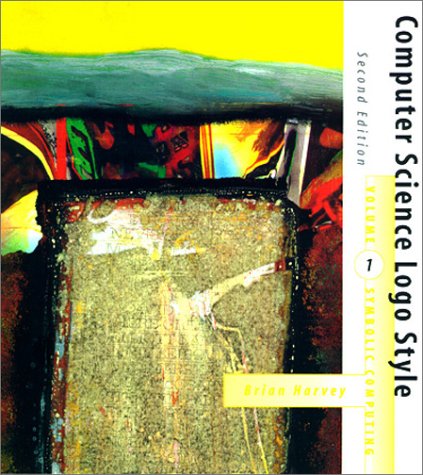
Computer Science Logo Style
by Brian Harvey
Publisher: The MIT Press 1997
ISBN/ASIN: 0262581515
ISBN-13: 9780262581516
Number of pages: 1068
Description:
This series is for people, adults and teenagers, who are interested in computer programming because it's fun. The three volumes use the Logo programming language as the vehicle for an exploration of computer science from the perspective of symbolic computation and artificial intelligence.
Download or read it online for free here:
Download link 1
Download link 2
Download link 3
(multiple PDF files)
Similar books
 The Fourth Paradigm: Data-Intensive Scientific Discovery
by Tony Hey, Stewart Tansley, Kristin Tolle - Microsoft Research
The Fourth Paradigm, the collection of essays expands on the vision of pioneering computer scientist Jim Gray for a new, fourth paradigm of discovery based on data-intensive science and offers insights into how it can be fully realized.
(18124 views)
 Foundations of Computer Science
by Hans-Peter Bischof
This text is an introduction to the formal study of computation. The course will provide students with a broad perspective of computer science and will acquaint them with various formal systems on which modern computer science is based.
(13607 views)
 A Machine Made this Book: Ten Sketches of Computer Science
by John Whitington - Coherent Press
Using examples from the publishing industry, Whitington introduces the fascinating discipline of Computer Science to the uninitiated. Chapters: Putting Marks on Paper; Letter Forms; Storing Words; Looking and Finding; Typing it In; Saving Space; etc.
(7349 views)
 Introduction to Computer Science using Java
by Bradley Kjell - Central Connecticut State University
The text for a first course in computer science using the programming language Java. It covers the fundamentals of programming and of computer science. It is assumed that you have the Java version 5.0 or later and a text editor such as Notepad.
(27835 views)