
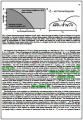
Statistical Genetics and Evolution of Quantitative Traits
by Richard A. Neher, Boris I. Shraiman
Publisher: arXiv 2011
Number of pages: 23
Description:
This review provides a simplified exposition of the concept and mathematics of Quasi-Linkage Equilibrium (QLE) which is central to the statistical description of genotypes in sexual populations. We show how key results of Quantitative Genetics such as the generalized Fisher's Fundamental Theorem, along with Wright's Adaptive Landscape, emerge within QLE from the dynamics of the genotype distribution.
Download or read it online for free here:
Download link
(840KB, PDF)
Similar books
 Gene Drives on the Horizon
- National Academies Press
'Gene Drives on the Horizon' outlines the state of knowledge relative to the science, ethics, public engagement, and risk assessment as they pertain to research directions of gene drive systems and governance of the research process.
(6617 views)
 Justice and the Human Genome Project
by Timothy F. Murphy, Marc A. Lappé - University of California Press
This book's nine essays probe the potential social uses and abuses of detailed genetic information. Lucid and wide-ranging, these contributions will provoke discussion among bioethicists, legal scholars, and policy makers.
(15854 views)
 Metagenomics: Sequences from the Environment
- National Library of Medicine
Metagenomics is the functional and sequence-based analysis of the collective microbial genomes that are contained in an environmental sample. This text is developed by NCBI from metagenome projects submitted to the Genomes Projects database.
(12735 views)
 Comparative Genomics
by Nicholas H. Bergman - Humana Press Inc.
A collection of robust protocols for molecular biologists beginning to use comparative genomic analysis tools in a variety of areas. The available chapters describe National Center for Biotechnology Information resources available to the public.
(17010 views)