
Efficient Estimation With A Priori Information
by Thomas J. Rothenberg
Publisher: Yale University Press 1973
ISBN/ASIN: 0300016077
ISBN-13: 9780300016079
Number of pages: 188
Description:
This book presents an attempt at unifying certain aspects of econometric theory by embedding them in a more general statistical framework. The unifying feature is the use of a priori information and the basic tool is the traditional Cramer-Rao inequality.
Download or read it online for free here:
Download link
(4.1MB, PDF)
Similar books
 Demand Model Estimation and Validation
by Daniel McFadden, Antti Talvitie, and Associates - University of California
From the table of contents: Theory and Estimation of Behavioral Travel Demand Models; Development, Testing, and Validaton of a Work-Trip Mode-Choice Model; Modeling Choices Other than Work-Trip; Issues in Demand Modeling and Forecasting.
(10963 views)
 Structural Analysis of Discrete Data with Econometric Applications
by Charles F. Manski, Daniel McFadden - The MIT Press
The book provides a methodological foundation for the analysis of economic problems involving discrete data, and charts the current frontiers of this subject. It is also useful for the researchers involved in the structural analysis of discrete data.
(15750 views)
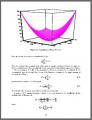 Econometrics
by Bruce E. Hansen - University of Wisconsin
Econometrics is the study of estimation and inference for economic models using economic data. Econometric theory concerns the study of tools and methods for applied econometric applications. This is a first-year Ph.D. econometrics textbook.
(16914 views)
 Introduction to Python for Econometrics, Statistics and Numerical Analysis
by Kevin Sheppard
Python is a widely used general purpose programming language, which happens to be well suited to Econometrics and other more general purpose data analysis tasks. These notes provide an introduction to Python for a beginning programmer.
(24603 views)