
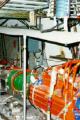
Accelerator Physics and Technologies for Linear Colliders
by Frank Zimmermann
Publisher: University of Chicago 2002
Number of pages: 43
Description:
These are lecture notes for accelerator physics and technologies for linear colliders at the University of Chicago. From the table of contents: Beam-Delivery Overview; Final Focus; Collisions and Luminosity; Spent Beam; etc.
Download or read it online for free here:
Download link
(2.4MB, PDF)
Similar books
 Charged Particle Beams
by Stanley Humphries - Wiley-Interscience
This textbook on charged particle beams gives a broad review of collective beam physics. Topics include emittance, space- charge effects, design of electron and ion guns, generation of RF and microwave energy by beams and free-electron lasers.
(15641 views)
 The Meson Factories
by T.E.O. Ericson, V.W. Hughes, D.E. Nagle - University of California Press
This volume is a collection of commented reprints concerning the physics program at meson factories, the characteristics of the accelerators, and the major instrumentation as well as the applications, the history and future of these facilities.
(8985 views)
 Introduction to Collider Physics
by Maxim Perelstein - arXiv
This is an introduction to some of the basic ideas and tools required for theoretical analysis of collider data. Several examples of Standard Model processes at electron-positron and hadron colliders are considered to illustrate these ideas.
(12870 views)
 Collider Physics
by D. Zeppenfeld - arXiv
Introduction to physics at e+e- and hadron colliders. A selection of processes is used to illustrate the strengths and capabilities of the different machines. The discussion includes W pair production and chargino searches at various colliders.
(8990 views)