
The Theory of Languages and Computation
by Jean Gallier, Andrew Hicks
Publisher: University of Pennsylvania 2006
Number of pages: 109
Description:
From the table of contents: Automata; Formal Languages (A Grammar for Parsing English, Context-Free Grammars, Derivations and Context-Free Languages, Normal Forms for Context-Free Grammars, Chomsky Normal Form, ...); Computability; Current Topics.
Download or read it online for free here:
Download link
(950KB, PDF)
Similar books
 Lecture Notes on the Lambda Calculus
by Peter Selinger - Dalhousie University
Topics covered in these notes include the untyped lambda calculus, the Church-Rosser theorem, combinatory algebras, the simply-typed lambda calculus, the Curry-Howard isomorphism, weak and strong normalization, type inference, etc.
(12255 views)
 A Practical Theory of Programming
by Eric C.R. Hehner - Springer
Understanding programming languages requires knowledge of the underlying theoretical model. This book explores aspects of programming that are amenable to mathematical proof. It describes a simple and comprehensive theory.
(14785 views)
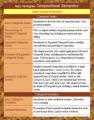 Compositional Semantics
by Gary Hardegree - UMass Amherst
Contents: Basic Categorial Syntax; Shortcomings of Standard Categorial Syntax; Expanded Categorial Syntax; Examples of Expanded Categorial Syntax; Categorial Logic; Basic Categorial Semantics; Lambda-Abstraction; Expanded Categorial Semantics; etc.
(16296 views)
 Formal Syntax and Semantics of Programming Languages
by Kenneth Slonneger, Barry L. Kurtz - Addison Wesley Longman
The book presents the typically difficult subject of formal methods in an informal, easy-to-follow manner. Readers with a basic grounding in discreet mathematics will be able to understand the practical applications of these difficult concepts.
(17112 views)