
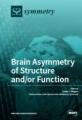
Brain Asymmetry of Structure and/or Function
by Lesley J. Rogers (ed.)
Publisher: MDPI AG 2017
ISBN-13: 9783038425519
Number of pages: 158
Description:
Research on asymmetry in a broad range of species, including humans, is presented in the chapters of this book. The various contributions report on and discuss behavioural lateralization, asymmetries in sensory receptors and neural organisation and the role of genes, hormones and environmental factors in the expression of lateralization. The likely advantages or disadvantages of having brain asymmetry are addressed in some chapters.
Download or read it online for free here:
Download link
(16MB, PDF)
Similar books
 Tumors of the Central Nervous System: Primary and Secondary
by Lee Roy Morgan (ed.) - InTech
A novel concept that is discussed in the book alludes to the transport of drugs bound to red blood cells into the highly vascular CNS tumors - both primary and metastatic. Such a transport mechanism is unique and of significant therapeutic potential.
(8843 views)
 Advances in the Neuroscience of Addiction
by Cynthia M Kuhn, George F Koob - CRC Press
Written by a distinguished international team of contributors, Advances in the Neuroscience of Addiction provides an excellent overview of the available and emerging approaches used to investigate the biologic mechanisms of drug addiction.
(11143 views)
 Neurodegenerative Diseases
by Uday Kishore (ed.) - InTech
This book highlights the pathophysiological complexities of the mechanisms and factors that are likely to be involved in a range of neuroinflammatory and neurodegenerative diseases including Alzheimer's disease, other Dementia, Parkinson Diseases.
(10109 views)
 Peripheral Neuropathy
by Nizar Souayah (ed.) - InTech
The objective of this book is to update health care professionals on recent advances in pathogenesis, diagnosis and treatment of peripheral neuropathy. This work was written by a group of clinicians and scientists with large expertise in the field.
(8717 views)