
Basic Concepts of Enriched Category Theory
by Max Kelly
Publisher: Cambridge University Press 2005
ISBN/ASIN: 0521287022
ISBN-13: 9780521287029
Number of pages: 143
Description:
Although numerous contributions from divers authors have brought enriched category theory to a developed state, there is still no connected account of the theory, or even of a substantial part of it. The present book is designed to supply the want in part, by giving a fairly complete treatment of the limited area to which the title refers. The basic concepts of category theory certainly include the notion of functor-category, of limit and colimit, of Kan extension, and of density; with their applications to completions, perhaps including those relative completions given by categories of algebras for limit-defined theories.
Download or read it online for free here:
Download link
(multiple formats)
Similar books
 Category Theory in Context
by Emily Riehl - Dover Publications
This is a concise, original text for a one-semester introduction to the subject. The treatment introduces the essential concepts of category theory: categories, functors, natural transformations, the Yoneda lemma, limits and colimits, monads, etc.
(6610 views)
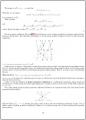 Combinatorics and Algebra of Tensor Calculus
by Sen Hu, Xuexing Lu, Yu Ye - arXiv
In this paper, we reveal the combinatorial nature of tensor calculus for strict tensor categories and show that there exists a monad which is described by the coarse-graining of graphs and characterizes the algebraic nature of tensor calculus.
(6618 views)
 Banach Modules and Functors on Categories of Banach Spaces
by J. Cigler, V. Losert, P.W. Michor - Marcel Dekker Inc
This book is the final outgrowth of a sequence of seminars about functors on categories of Banach spaces (held 1971 - 1975) and several doctoral dissertations. It has been written for readers with a general background in functional analysis.
(10867 views)
 Category Theory for Computing Science
by Michael Barr, Charles Wells - Prentice Hall
This book is a textbook in basic category theory, written specifically to be read by researchers and students in computing science. We expound the constructions basic to category theory in the context of applications to computing science.
(10251 views)