
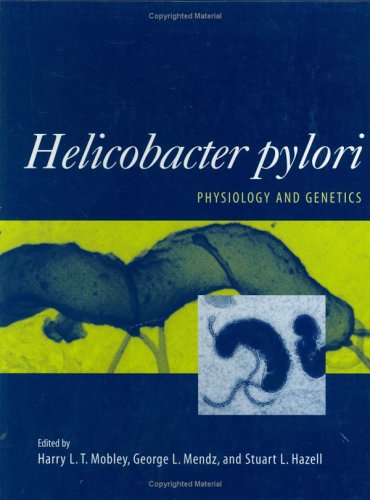
Helicobacter pylori: Physiology and Genetics
by Harry L. T. Mobley, George L. Mendz, Stuart L. Hazell
Publisher: ASM Press 2001
ISBN/ASIN: 1555812139
ISBN-13: 9781555812133
Number of pages: 626
Description:
This new volume offers a comprehensive survey of Helicobacter biology, ranging from fundamental bacteriology through energy metabolism and synthetic pathways, physiology and molecular biology, genetics, epidemiology, virulence and pathogenic mechanisms, pathogenesis in the host, diagnosis and treatment, and the relationship between Helicobacter pylori and other Helicobacter species.
Download or read it online for free here:
Read online
(online html)
Similar books
 Baculovirus Molecular Biology
by George F Rohrmann - Bethesda
This book annotates what is known about the function of the 150 genes encoded by the genome of the baculovirus AcMNPV. The text integrates the role of the gene products in the biology of processes central to the pathology of baculoviruses.
(13080 views)
 Bad Bug Book: Foodborne Pathogenic Microorganisms and Natural Toxins
- International Medical Publishing, Inc.
This handbook provides basic facts regarding foodborne pathogenic microorganisms and natural toxins. Recent articles have been added to selected chapters to update the handbook with information on later outbreaks or incidents of foodborne disease.
(19220 views)
 Emerging Viral Diseases: The One Health Connection
- National Academies Press
The authors examine factors driving the appearance, establishment, and spread of emerging, re-emerging and novel viral diseases; the global health and economic impacts of recently emerging viral diseases in humans; and the policy approaches ...
(7837 views)
 Dengue: Guidelines for Diagnosis, Treatment, Prevention and Control
- World Health Organization
The magnitude of the dengue problem has increased dramatically and has extended geographically to many previously unaffected areas. This book provides updated practical information on the clinical management and delivery of clinical services.
(9054 views)