
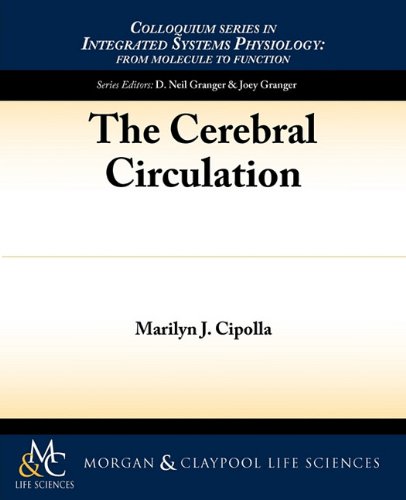
The Cerebral Circulation
by Marilyn J. Cipolla
Publisher: Morgan & Claypool Life Sciences 2010
ISBN/ASIN: 1615040129
ISBN-13: 9781615040124
Number of pages: 70
Description:
This presentation describes structural and functional properties of the cerebral circulation that are unique to the brain, an organ with high metabolic demands, and the need for tight water and ion homeostasis. Autoregulation is pronounced in the brain, with myogenic, metabolic, and neurogenic mechanisms contributing to maintain relatively constant blood flow during both increases and decreases in pressure.
Download or read it online for free here:
Download link
(3.5MB, PDF)
Similar books
 Pain, Its Origin, Conduction, Perception and Diagnostic Significance
by Richard J. Behan - D. Appleton
Pain is universal, and is present in practically every disease. The physician needs to know the various factors to which a certain pain may be due, and also the reasons why it should be produced and the different diseases giving rise to pain.
(10759 views)
 Pain and Disability: Clinical, Behavioral, and Public Policy Perspectives
by M. Osterweis, A. Kleinman, D. Mechanic - National Academies Press
This volume covers the epidemiology and physiology of pain; psychosocial contributions to pain and illness behavior; promising ways of assessing and measuring chronic pain; clinical aspects of prevention, diagnosis, treatment, and rehabilitation.
(14825 views)
 Human Physiology
- Wikibooks
Human Physiology explains the workings of your body, it is intended as an undergraduate-level guide to the functios of the body systems at a cellular level, and explains how they work together to maintain a favorable environment for your cells.
(90913 views)
 Experimental Physiology and Anatomy
by Walter Hollis Eddy - American Book Co.
This book represents a selection of experimental matter, adapted to the age of elementary students of the subject and which will present the facts of physiology in a concrete form. This is an attempt to place the subject on an experimental basis.
(9620 views)